
10-year campaign restores 150 kilometers of Qingdao's coastline
China Daily 2026-06-09 15:59:00
A decadelong campaign to restore the coastline in Qingdao's West Coast New Area has transformed shores once cluttered with illegal fish farms into uninterrupted views of blue waters, sandy beaches and flying seabirds.
Since the campaign began in 2016, the area has restored more than 150 kilometers of coastline. In addition, abandoned aquaculture facilities stretching over 100 km of coastline have been dismantled, more than 1,200 hectares of coastal wetlands have been rehabilitated, and over 260 hectares of coastal vegetation have been restored, according to local authorities.
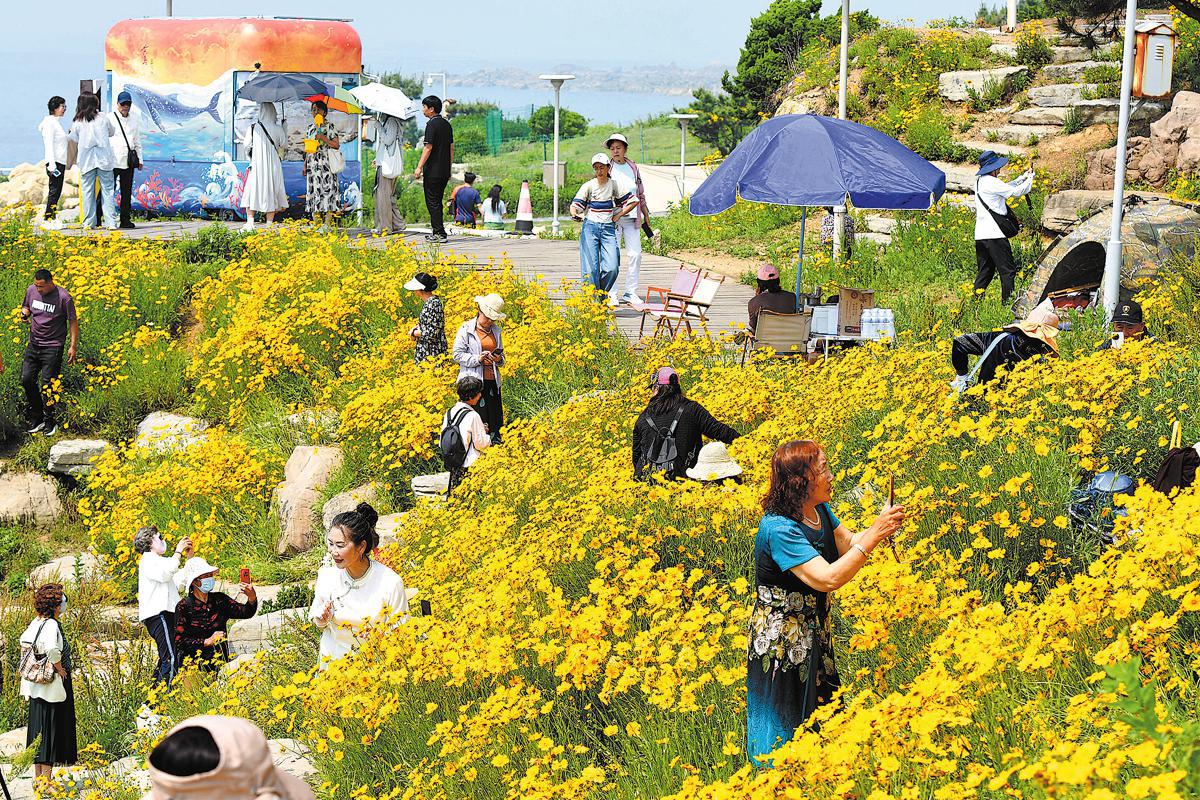 Tourists enjoy blossoming flowers at a park in Yumingzui in the West Coast New Area of Qingdao, Shandong province, last month. CHINA DAILY
The campaign aimed not only to support the sustainable growth of the marine economy, but also to repair and protect the coastal ecosystem — restoring the natural shoreline, improving nearshore environments, and coordinating land and sea management as a single system.
One of the toughest problems was relocating aquaculture farmers.
To ease the impact, local authorities rolled out a series of measures, such as providing compensation to affected aquaculture farmers, along with support to help them shift into new lines of work.
Fishing infrastructure was upgraded, with dedicated docks offering safer and more convenient access to the sea. At the same time, tourism and other industries were developed to create new income streams.
Chen Guishuang, a former aquaculture farmer from Qingdao's Xuejiadao subdistrict, initially struggled to accept the decision to remove the breeding ponds that had long supported his family's livelihood.
"But later, I realized the government's policies were quite supportive and took our needs fully into account," Chen said, adding that local authorities helped farmers transition by guiding them to register new businesses and offering practical advice on future development.
"The improvement of the coastal environment has also created new opportunities — my seafood company's revenue has increased severalfold compared with before," Chen said.
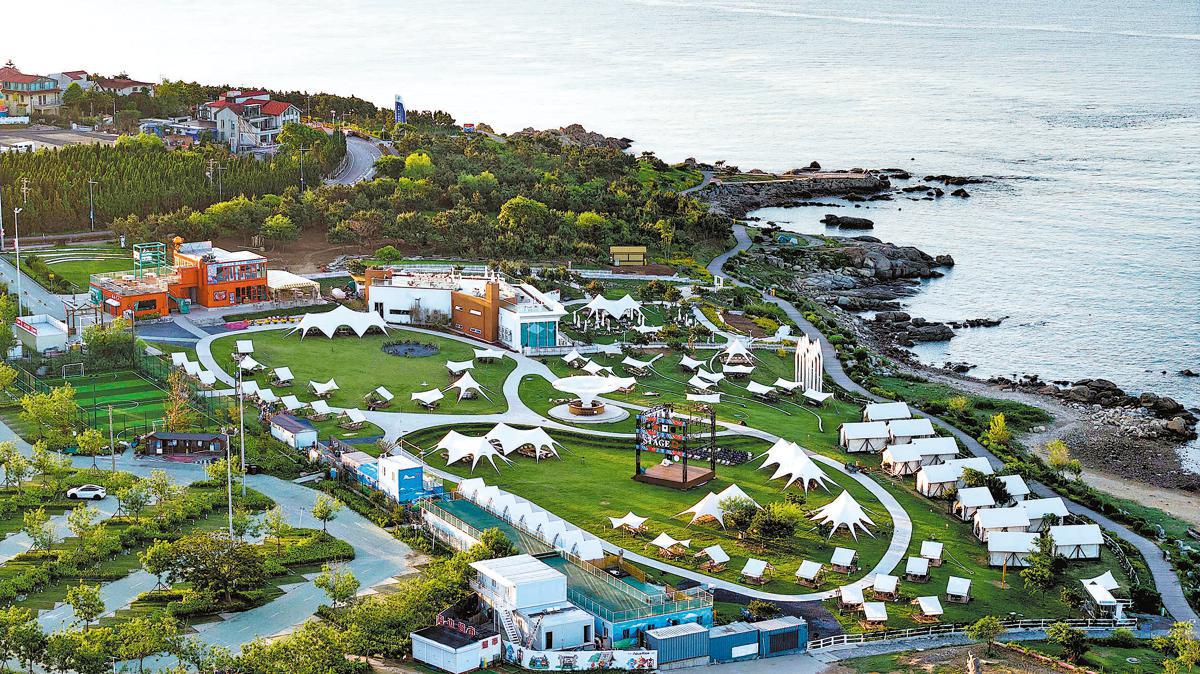 A campsite overlooks the ocean in the West Coast New Area. HAN JIAJUN/FOR CHINA DAILY
Public access to the sea has also expanded. Over 90 km of coastal slow-traffic routes and visual corridors have been built, along with more than 90 hectares of new seaside parks, including Phoenix Mountain Park and the City Balcony — turning the once blocked shoreline into an open, shared space.
With 46 rivers crisscrossing the region — 20 of them flowing into the sea — managing water quality in the bay remains complex. These winding waterways carry uncertainties, making monitoring and regulation more difficult.
To address this, the area has established a smart marine management platform, integrating thermal imaging and AI-powered video to enable round-the-clock, full-coverage monitoring of nearshore waters.
Combined with ship identification systems, the Beidou satellite navigation network and radar detection, the platform can track maritime activity in real time, said Wang Hongwei, an official from the area's marine development bureau.
"Any abnormality is quickly detected, which gives us strong technical support for both marine protection and emergency response," he said.
Islands, as key parts of the marine ecosystem, have also drawn close attention. Once threatened by invasive species and coastal erosion, islands such as Lingshan, Zhucha and Zhaitang have undergone systematic ecological rehabilitation — from vegetation recovery to the removal of non-native species, said Sui Junchang, director of the area's marine development bureau.
Today, these islands have taken on a new role — not just as ecological assets, but also as popular destinations drawing visitors year-round.
"We will continue to advance the development of 'beautiful bays', expand coastal access and further improve the experience of being close to the sea," said Sui.
(China Daily)
责任编辑:王晓莹