
Spring in Yellow River delta: A haven for migratory birds
chinadaily.com.cn 2026-04-08 15:09:20
On a spring morning in Dongying's Yellow River Delta National Nature Reserve, vast wetlands ripple under soft sunlight, the reeds sway gently, and waterbirds skim the surface.
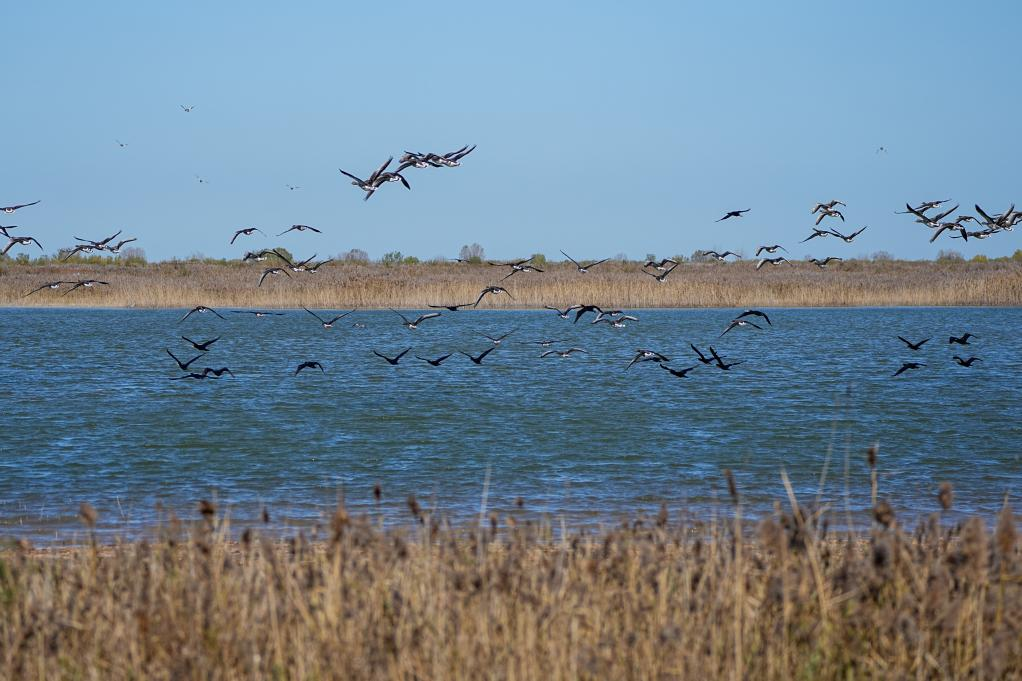
As a vital stop on global migratory routes, millions of birds arrive here each year to rest, feed, and breed. Rare species such as Oriental white storks, red-crowned cranes, and black-headed gulls are regular residents, bringing life to this coastal wetland.
At the reserve's ecological monitoring center, AI systems and real-time tracking record every bird's movement. A "sky-to-sea" monitoring network — including drones, infrared cameras, and data analysis — helps guide wetland restoration and ecological water management, creating safer habitats for migratory birds.
Technology also protects birds in unexpected ways. On power towers, Oriental white storks nest safely thanks to over 12,000 insulating bird guards, which prevent short circuits from droppings while leaving space for nests.
Since these measures were implemented, bird-related power outages have dropped nearly 80 percent, better protecting the wildlife while securing a safe power supply.
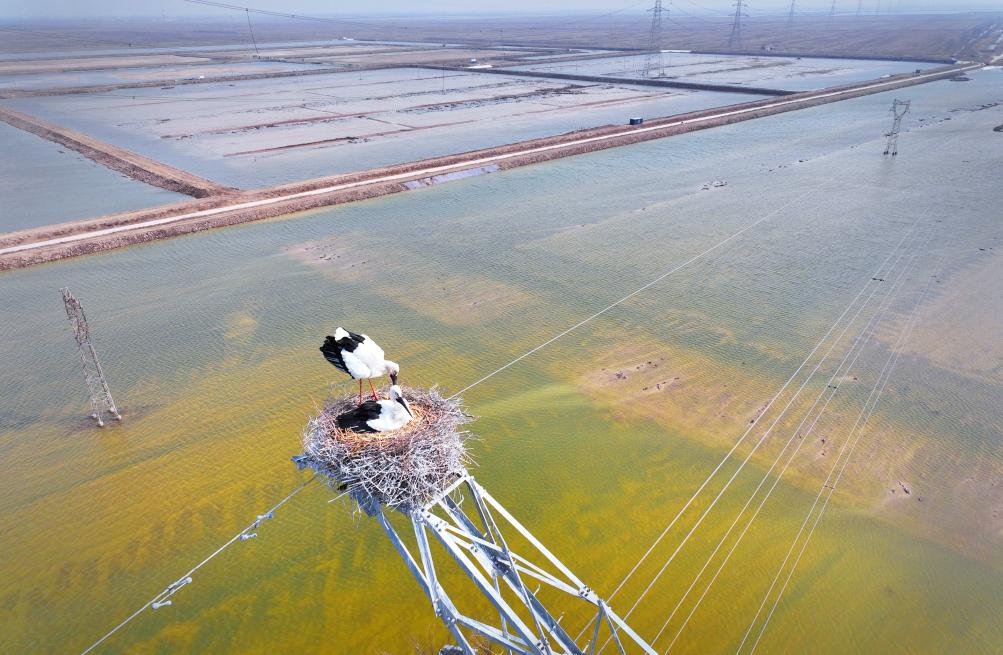
Today, the reserve hosts 1,633 wildlife species and 685 plants, with more than 200 migratory birds breeding or overwintering each year. Once-invaded marshes now bloom with salt-tolerant vegetation, offering abundant food and shelter.
"Birds are the true barometer of ecological health," says Zhao Yajie, deputy director of the reserve.
"Their annual return shows the Yellow River Delta is flourishing. With the aid of science and careful stewardship, this wetland will remain vibrant — a safe haven where birds can thrive," she added.
(chinadaily.com.cn)
责任编辑:王晓莹