
Oil markets brace for more turbulence ahead amid geopolitical risks, supply-demand dynamics
English | 2026-07-10 15:00:38
武玮佳来源:Xinhua
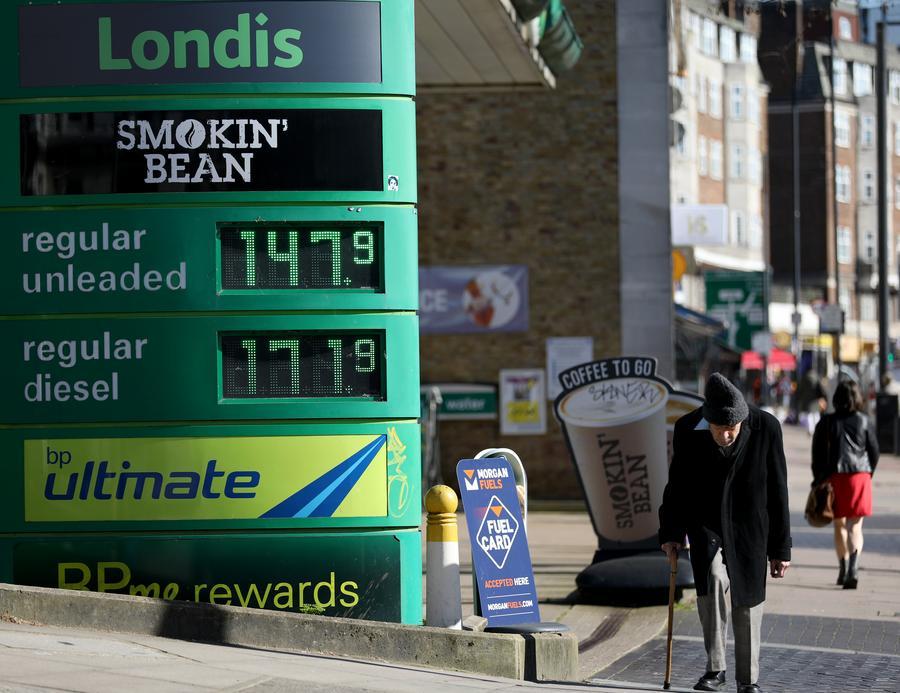 A man walks past a petrol station in London, Britain, March 18, 2026. (Xinhua/Li Ying)
BEIJING, July 10 (Xinhua) -- Middle East tensions flared anew on Wednesday, sending oil prices sharply higher after the U.S. military resumed strikes on Iran. Brent crude futures jumped more than 5 percent, nearing 80 U.S. dollars a barrel.
Investors were quick to price in the risk of further supply disruptions through the Strait of Hormuz, one of the world's most important energy shipping routes, though analysts said that while renewed tensions can push oil prices higher, the broader market outlook remains constrained by expectations of ample supply.
SUPPLY GROWTH CONTINUES
The continued production increase by OPEC and its allies, known as OPEC+, and rising output from non-OPEC producers have reinforced expectations of a looser oil market, especially as global demand remains weak.
Once geopolitical tensions begin to ease, the market's focus is likely to shift from concerns over wartime supply disruptions to the rebalancing of global supply and demand, analysts have said.
On the supply side, multiple factors have encouraged OPEC+ to continue unwinding production cuts. The OPEC recently announced that seven major OPEC+ producers, notably Saudi Arabia and Russia, will raise crude oil production by a combined 188,000 barrels per day (bpd) in August. The decision marks the fifth consecutive monthly increase in production quotas.
The current round of output increases began in April, when production was raised by 206,000 bpd in both April and May. After the United Arab Emirates quit both OPEC and OPEC+ on May 1, the number of countries participating in the coordinated increase fell to seven, with the monthly increase adjusted to 188,000 bpd, a pace maintained from June through August.
Meanwhile, production outside OPEC continues to expand. Output from major producers such as the United States and Brazil is projected to increase by around 1.15 million bpd in 2026, further boosting supply to the global market.
Market pricing has already reflected the shift in supply expectations. Brent crude futures have retreated sharply from their peak of nearly 119 dollars a barrel during the Iran war.
Against this backdrop, OPEC+'s decision to maintain gradual production increases reflects not a single market signal but a combination of improving supply-demand fundamentals and efforts to balance differing interests among member countries.
GLUT LOOMS
Demand, however, has failed to keep pace. The market, once defined by shortage, now looks to be tilting toward surplus.
Manufacturing remains weak in Europe and America. Add rising stockpiles of refined products, and oil consumption is left doubly weighed down.
According to the International Energy Agency's latest monthly oil market report, global demand is expected to contract by around 1.1 million bpd year on year in 2026. By 2027, the global crude market could face an oversupply of roughly 5 million bpd.
Signs of imbalance have already emerged in the physical crude market. Saudi Aramco recently cut the official selling price of its flagship Arab Light crude for August-loading cargoes to Asia by 11 dollars a barrel. The move followed consecutive price cuts for June and July deliveries.
Saudi Arabia's latest price cut speaks to how fierce the battle for Asian market share has become. Yet even after slashing prices, Reuters reports, Saudi crude still costs more than spot cargoes readily available from rival suppliers.
As supply recovers while demand remains subdued, major producers are increasingly relying on price discounts to defend their positions in key Asian markets.
PEACE NOT YET PRICED IN
Fundamentals aside, geopolitics still holds the whip hand over oil prices.
After Washington and Tehran signed a memorandum of understanding, several international financial institutions trimmed their oil price forecasts, betting that supply risks have eased.
However, geopolitical uncertainty has proved to be persistent. The latest strikes between the United States and Iran have reinforced concerns that tensions could flare up at any time. As security conditions in the Gulf remain fragile, shipping through the Strait of Hormuz cannot be normalized in the near term.
Over the medium term, however, market fundamentals are expected to regain the upper hand. As Gulf oil exports continue to recover, OPEC+ gradually increases production and global demand remains subdued, oversupply pressures are likely to become more pronounced. As a result, oil prices will increasingly be driven by the balance between supply and demand rather than geopolitical risks.
Oslo-headquartered energy research and business intelligence company Rystad Energy has said in a recent report that although geopolitical tensions could periodically push oil prices higher, they are unlikely to alter the broader trend toward a well-supplied market over the medium term.
Goldman Sachs also expects continued OPEC+ production growth, combined with sluggish demand, to cap further gains in oil prices, while the geopolitical risk premium is likely to continue fading.
责任编辑:武玮佳