
China Focus: China’s top grain-producing province turns paddies into tourist destinations
English | 2026-09-07 16:45:50
武玮佳来源:Xinhua
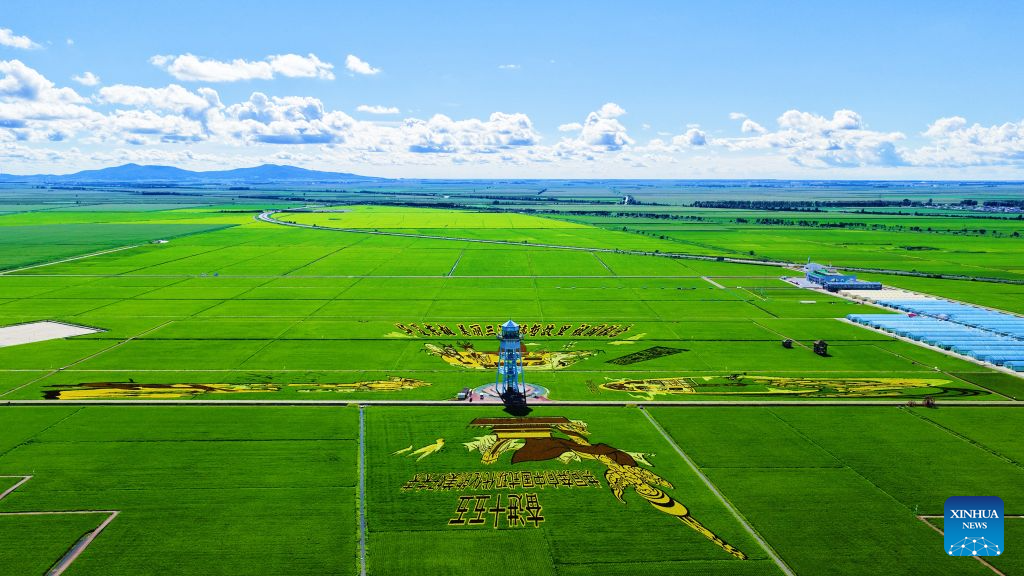
This photo taken on July 29, 2026 shows a panoramic view of rice paddy art pieces at a rice park in Fujin City, northeast China's Heilongjiang Province. (Xinhua)
HARBIN, Sept. 6 (Xinhua) -- Surrounded by four rice paddy art pieces stretching across the vast fields in northeast China, a giant piece in the form of a QR code catches many people's attention. It can be scanned to access an online store for agricultural products.
These art pieces, spanning 120,000 square meters, are located in a rice park in the city of Fujin, northeast China's Heilongjiang Province. Heilongjiang, China's top grain-producing province, has transformed vast paddies into thriving tourism destinations, boosting local incomes.
Turning a design into a giant field canvas requires multiple steps, including design, positioning, layout marking and transplanting. Rice varieties are selected to match the palette: black rice for black and brown sections, edible rice for green, and ornamental rice for yellow and white.
However, this form of art was far less precise in its early days.
"When we first tried in 2017, field positioning relied entirely on manual labor. Workers even had to stand high with megaphones to direct the placement," said Wang Chao, head of the office at the Fujin Tourism Development Service Center.
"The designs were mostly flat. Now, GPS positioning and 3D composition techniques have made the lines and layers much sharper," Wang noted.
This rice landscape is drawing growing numbers of visitors.
Zhao Zihan, a tourist from the neighboring city of Shuangyashan, visited the spot in Fujin with her family on a Saturday. "I've passed by several times but never had the chance to stop. This time I came specifically to see it," she said. "The vast rice paddy art lifts my spirit and fills me with hope for the future."
Beyond admiring the scene, visitors can now engage in increasingly diverse and immersive experiences, from transplanting rice and milling grain to exploring rice growth and camping beside the paddies.
Many of the park's service staff come from surrounding villages, and the visitor flow has spurred the growth of nearby farmstay restaurants. Wang said related services earn participating villagers across 10 villages an extra 4,000 yuan (about 590 U.S. dollars) per person each year.
The story of agritourism is unfolding across Heilongjiang's vast landscape.
In Xinghuo Village, a Korean ethnic village in Huachuan County, the transformation is vivid.
Home to 407 households and over 7,400 mu (around 493 hectares) of farmland, the village sits beside a highway amid scenic surroundings, yet was once just an ordinary village focused on rice cultivation.
"Back then, the roads were mostly dirt paths. There was no work for me in the village, so I had to go out and make my way," said Han Liuhua, 45, who left for cities like Shanghai and Qingdao, both in east China, at age 18.
In 2018, she gave up her urban career and returned to the village, becoming the first migrant worker to come back in over 20 years.
"When I first opened the restaurant in 2022, the villagers weren't very optimistic about me. Visitor numbers were low back then," Han said, noting that the scenic area has since brought a surge in foot traffic, and the restaurant's daily sales can now reach more than 16,000 yuan.
"The distance from my office to my restaurant is less than 50 meters. But when tourists are at their peak, it takes me five minutes just to squeeze through," Han said. "I'm one of the biggest beneficiaries of the village's transformation."
In 2025, the village's scenic area opened, welcoming 1.33 million visitors, generating 300 million yuan in revenue across the full industrial chain, and creating jobs for over 800 people.
The scenic area has renovated farmhouse exteriors in the traditional Korean style, built ecological picking gardens, and created an 8,000-square-meter giant rice paddy art piece to develop diversified, immersive and year-round products.
Inside the park, visitors can immerse themselves in Korean ethnic culture and agricultural experiences, from making kimchi and brewing rice wine to transplanting and harvesting rice.
The same trend is unfolding elsewhere in the province. In the city of Wuchang, a renowned rice-growing area, local enterprises are also actively developing agritourism products.
"I often come here after work. Rice has always been close to my heart, and seeing the vast paddies is far more relaxing than visiting a regular park," said a local resident surnamed Hu, who was picnicking at Qiaofu Dayuan Agricultural Co., Ltd.
The company hosts a variety of rice culture events each year, including rice-planting festivals and harvest ceremonies, while also serving as an experimental education base for primary school students, welcoming tens of thousands of visitors from across the country annually.
"Premium rice isn't just about taste. It is about the experience," said Qiao Wenzhi, head of the company, adding that by combining product customization with experiential value, the premium for their rice has risen by up to 40 percent.
Heilongjiang's broader push for agritourism also comes as China moves to diversify its tourism offerings and cultivate new growth drivers for the industry.
"Developing the multiple functions of agriculture" has been incorporated as a measure in the outline of China's 15th Five-Year Plan (2026-2030), referring to efforts to ensure food security and supply while integrating agriculture with culture and tourism.
The latest five-year tourism development plan, approved by the State Council and released in July 2026, calls for nurturing new drivers of tourism growth and enriching the supply of high-quality tourism experiences.■
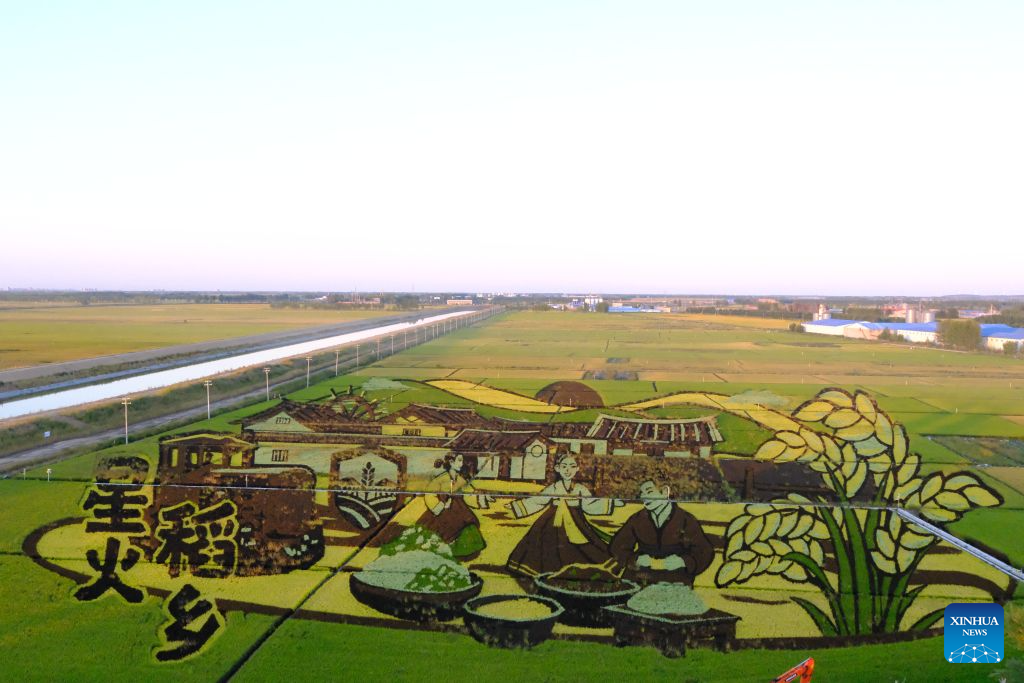
This photo taken on Sept. 5, 2026 shows a rice paddy art piece in Xinghuo Village of Huachuan County, northeast China's Heilongjiang Province. (Xinhua/Ji Hang)
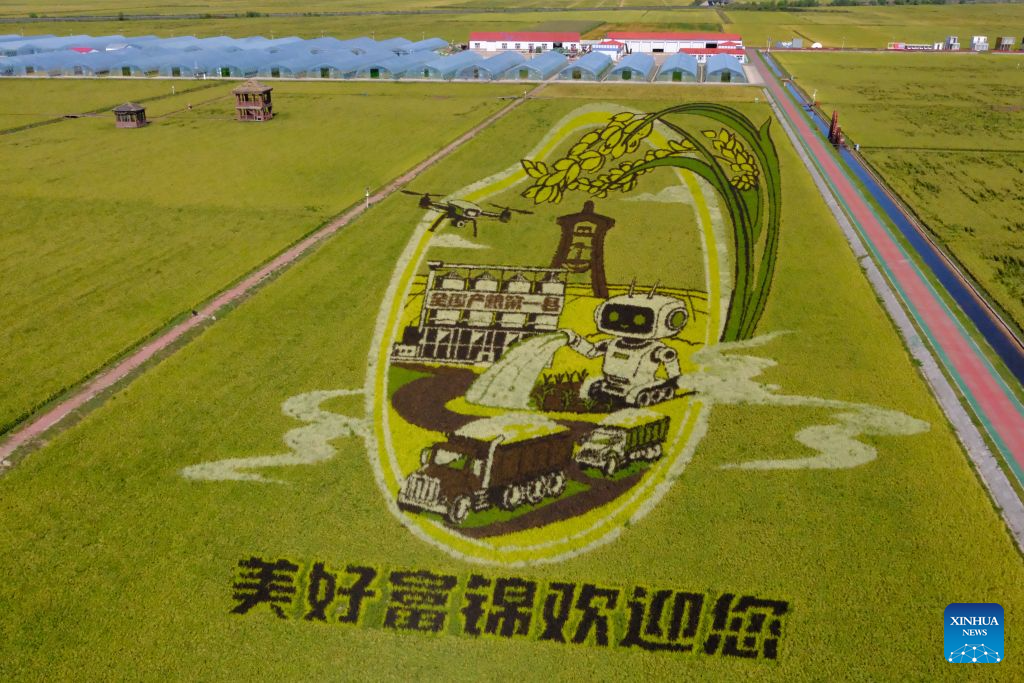
This photo taken on Sept. 5, 2026 shows a rice paddy art piece at a rice park in Fujin City, northeast China's Heilongjiang Province. (Xinhua/Ji Hang)
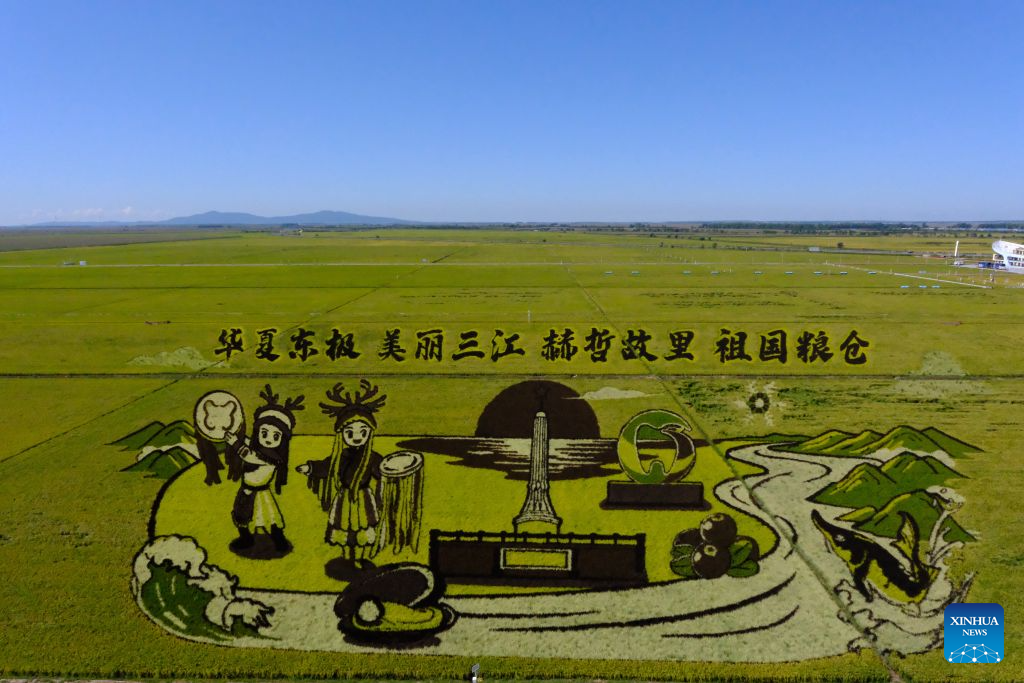
This photo taken on Sept. 5, 2026 shows a rice paddy art piece at a rice park in Fujin City, northeast China's Heilongjiang Province. (Xinhua/Ji Hang)
责任编辑:武玮佳