
枯枝塑大圣 齐鲁“万物生”
大众新闻·大众日报 常青 王帅 常青 王帅 2026-11-20 16:05:59原创
全世界的每座城市每年都会修剪大量树木,绝大多数枝条被清运、粉碎、填埋。如果它们不再是垃圾,而是想象的原料,会发生什么?在山东东营一座安静的村庄里,创作者樊立杰给出了他的答案。
Cities around the world trim countless trees every year, and most of the branches are hauled away, chipped and landfilled. What if they were treated not as waste, but as raw material for imagination? In a quiet village in Dongying, Shandong, creator Fan Lijie offers his answer.
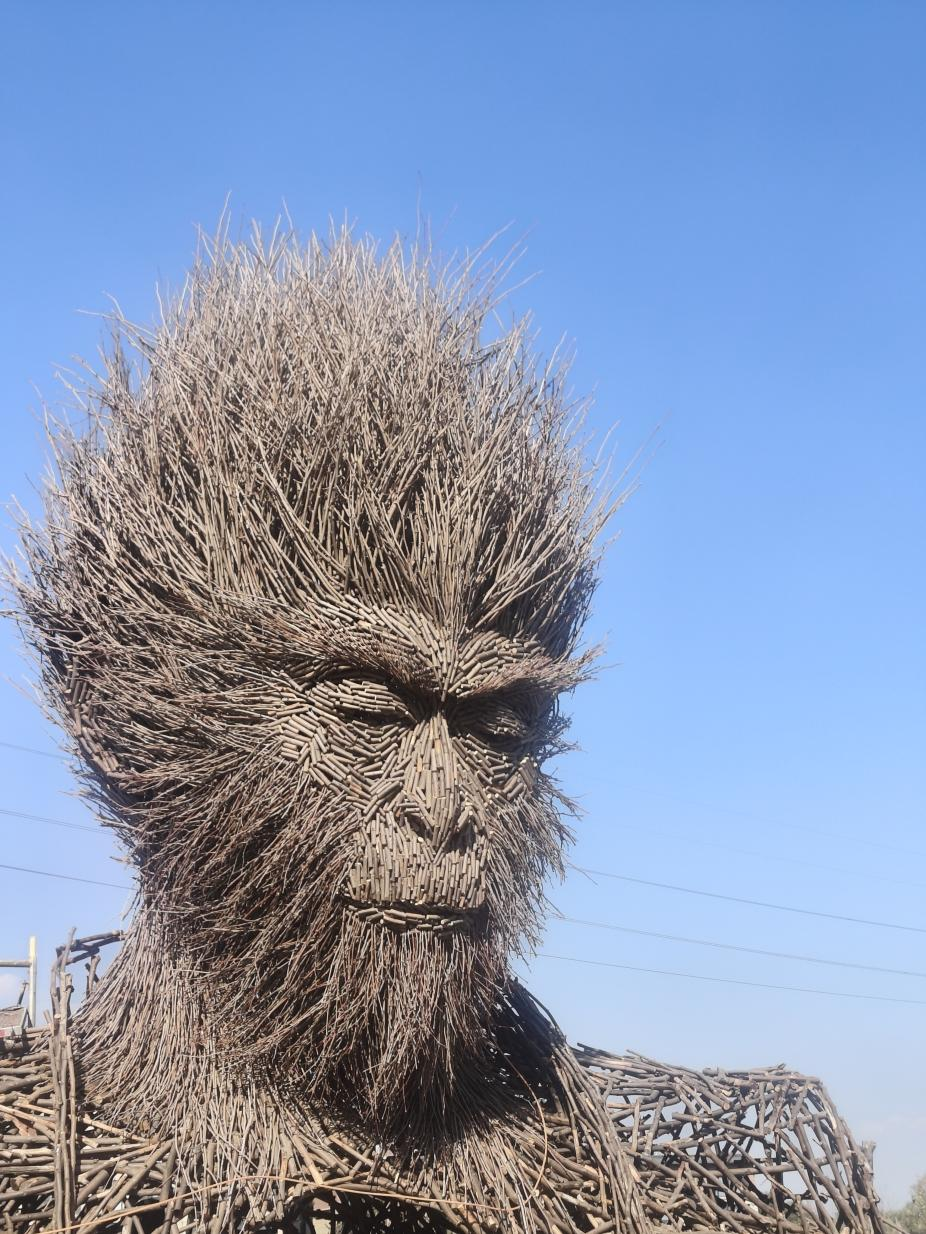
在东营垦利区郝家镇樊家村的村道旁,一尊七米高的半身雕塑静静伫立。整件作品全部由园林修剪废弃的法桐枯枝搭建而成,总成本仅三千元人民币(约 450 美元)。80 后创作者樊立杰独自一人,耗时两个多月,将万千粗糙枝桠交错固定,完成这件作品。
Beside the village road in Fanjia Village, Haojia Town, Kenli District, Dongying, stands a seven-metre-tall half-body sculpture. It is built entirely from discarded plane tree branches left over from garden pruning, with a total cost of only 3,000 yuan (roughly 450 US dollars). Fan Lijie, a post-80s creator, spent more than two months working alone, weaving and securing countless rough branches to finish the piece.
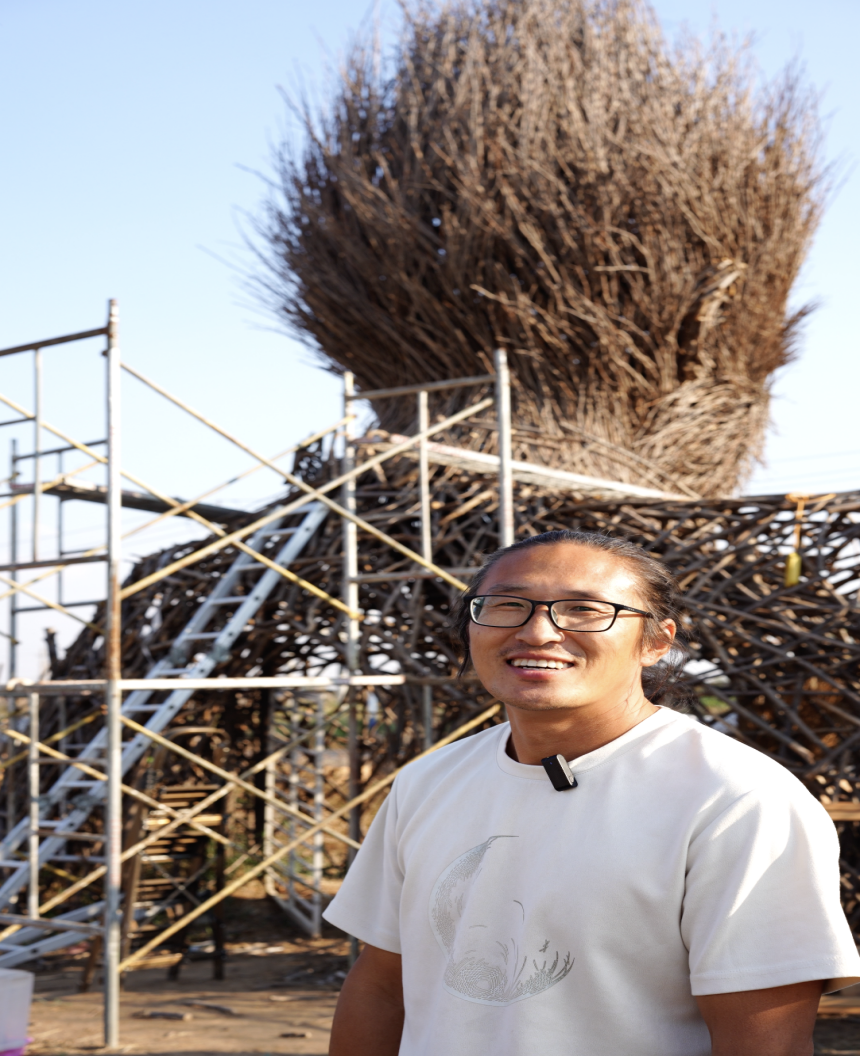
樊立杰是雕塑科班出身,拥有二十多年创作经历。长久以来,他一直受困于专业艺术材料成本高昂的难题。
Trained formally in sculpture, Fan Lijie has over two decades of creative experience. For a long time, he has struggled with the high cost of professional art supplies.
“做雕塑成本太高,而且不环保,人终归是要和大自然共处的,我就反复在想,怎么样可以在不伤害自然的情况下,还能做自己喜欢的事。” 樊立杰把目光投向园林修剪后废弃的法桐枯枝。两三车枯枝只需几百元,成了他经济又环保的创作原料。
“Sculpture is costly and environmentally unfriendly. Humans are meant to live alongside nature. I kept thinking about how I could do what I love without harming the natural world.” Fan Lijie turned to discarded plane tree branches from garden maintenance. A few truckloads of branches cost only a few hundred yuan, becoming his affordable, eco-friendly creative material.
没有打磨抛光的木料,没有预设图纸,每一处受力、每一根枝条的角度,都依靠双手反复试错。第一版成型之后,他觉得作品没有契合“顺应自然”的构思,便全部拆除重建。这件作品借用了中国民间形象孙悟空的外形,但讲述神话故事并不是他的初衷。对樊立杰而言,这个造型只是一个载体,他愿意留给观者自由解读的空间。
There are no sanded or polished timbers, no pre-drawn blueprints. Every load-bearing point and every branch angle was found through hands-on trial and error. After finishing the first version, he took it all apart and rebuilt it, because it failed to match his vision of working with nature. The work takes the shape of Monkey King, a traditional Chinese folk figure, yet retelling the myth is not his intention. For Fan, this form is merely a vessel for circular ideas, and he leaves it open for viewers to interpret freely.
近年来,可再生循环艺术成为世界风潮。世界各地都有创作者将废料转化为公共艺术:丹麦艺术家Thomas Dambo用回收木料在多国打造巨型森林巨魔;印度艺术家尼克・钱德,依托城市建筑垃圾建起闻名世界的岩石花园。很多这类知名项目,都拥有外部资助或项目委托。
In recent years, upcycling art has gained momentum across the globe. Creators worldwide transform waste into public artworks: Danish artist Thomas Dambo builds giant forest trolls from reclaimed timber across multiple countries; Indian artist Nek Chand constructed the world-famous Rock Garden using urban construction debris. Many of these well-known projects receive external grants or official commissions.
一项全球调研显示,40%的全球消费者更愿意修复、改造旧物,优先选择再生利用,而非持续购置新品。樊立杰可贵之处在于其草根底色:扎根乡村、自筹经费,仅凭朴素的艺术信念坚持创作。他想证明,艺术不需要昂贵材料,可以从废弃物之中、从普通人的想象里,从质朴的土地中生长出来。这件作品,正是山东乃至中国,资源循环利用、可持续艺术表达浪潮里,一个鲜活朴素的本地样本。
A global survey shows that 40% of consumers worldwide prefer repairing and upcycling old items, prioritizing reuse over buying new products. What makes Fan Lijie remarkable is his grassroots spirit: rooted in a rural village, self-funding his work, and creating driven only by a sincere belief in art.He seeks to prove that art does not require costly materials. It can grow from waste, from the imagination of ordinary people, and from the unadorned land. This sculpture serves as a vivid, down-to-earth local example of the shift toward resource circularity and sustainable artistic expression in Shandong and across China.
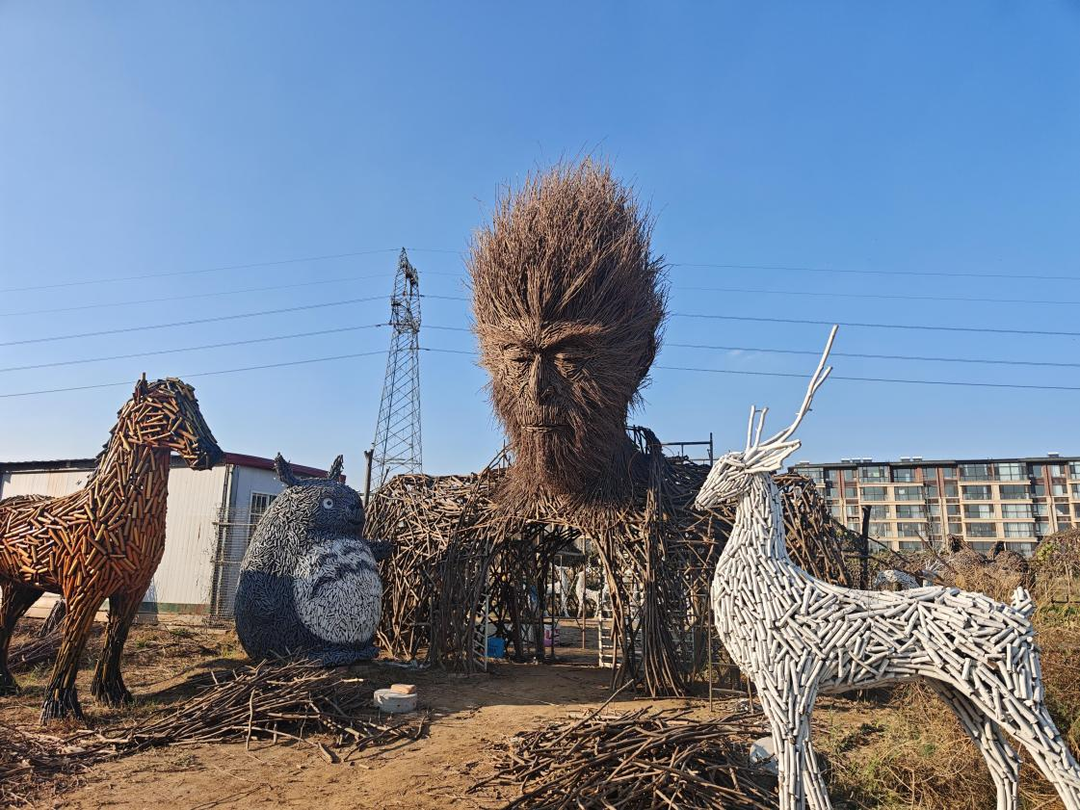
如今,樊立杰的艺术园区免费开放,不设门票。不同的参观者,可以在这件作品身上读出不一样的感受。在他的规划里,这尊悟空雕塑只是这片园地的 “大门”。他打算把身后的土地打造成一处自然园区,种粮种菜、饲养畜禽。“让孩子们亲眼看到生命的完整循环,而不只是有用的那部分。”樊立杰说。
Today, Fan’s art site is open to the public free of charge. Different visitors find different meanings in the sculpture. In his plan, this Wukong piece is only the “gateway” to the space. He aims to turn the land behind it into a natural compound where he grows grain and vegetables and raises livestock. “Let children witness the full cycle of life, not only the useful part,” Fan Lijie says.
作品意外走红之后,各类商业邀约接踵而至。樊立杰坦然看见这份机遇,却做出清醒的取舍:“钱不能衡量这份快乐,我在寻找内心的平衡和治愈性的快乐,这和钱无关。”
After the work unexpectedly went viral, commercial offers came pouring in. Fan recognised this opportunity, yet made a deliberate choice: “Money cannot measure this joy. I am seeking inner balance and healing happiness, which has nothing to do with money.”
有力量的艺术,可以从废弃物里生长出来,也不必被沉重的商业诉求裹挟。
Powerful art can grow from waste. It does not have to be weighed down by heavy commercial demands.
在你的身边,还有哪些废弃物可以变成艺术?
What waste materials around you could be turned into art?
(大众新闻记者 常青 王帅)
责任编辑:李玫萱